Patagonia
El Calafate + El Chaltén Travel Notes
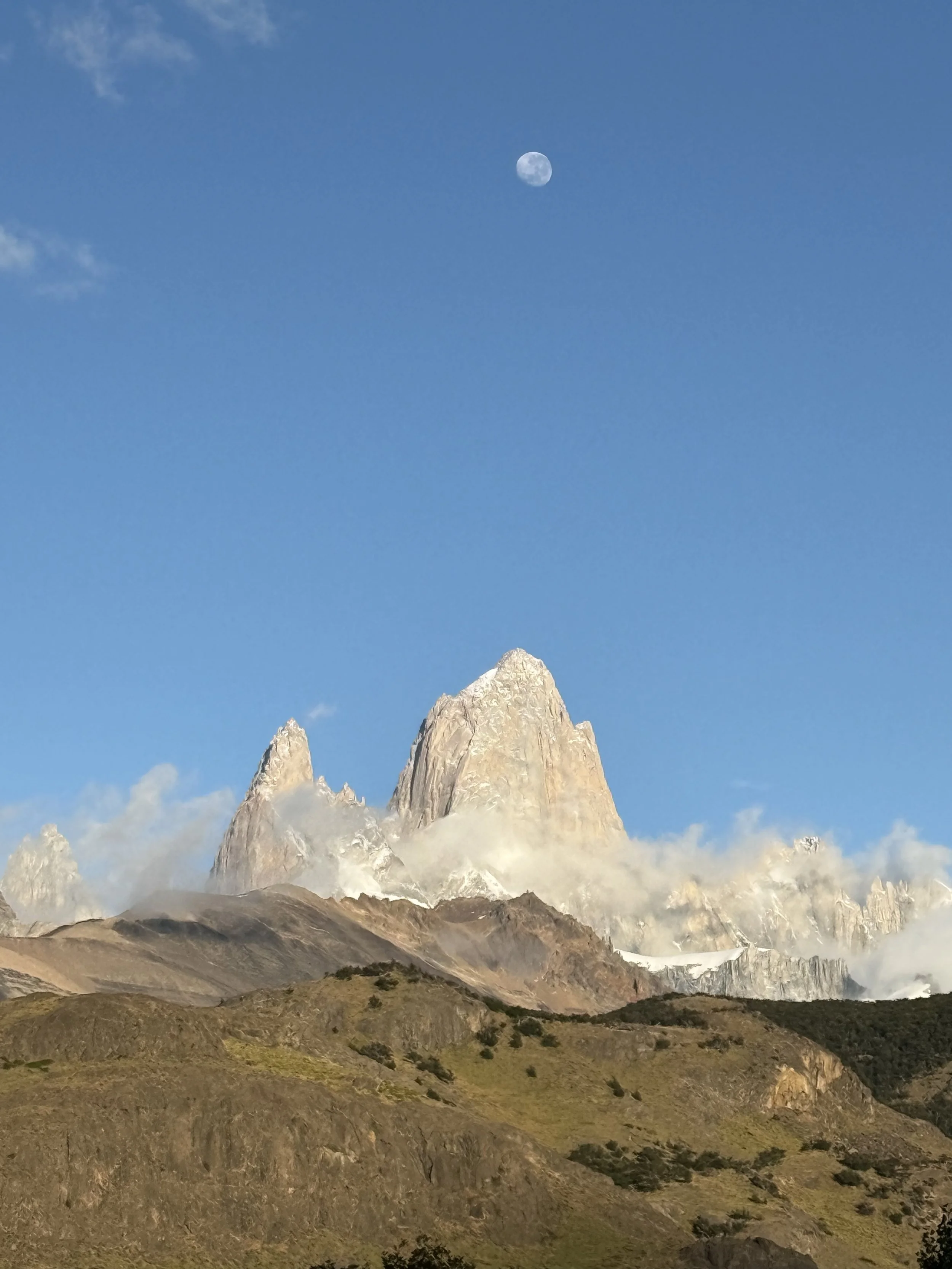
We spent time in both El Calafate and El Chaltén (January 2026), and this part of Patagonia ended up being one of those experiences that stays with you. It’s rugged and quiet and breathtaking in a way that’s hard to explain until you’re standing in it.
Here’s everything we did and what we learned along the way.
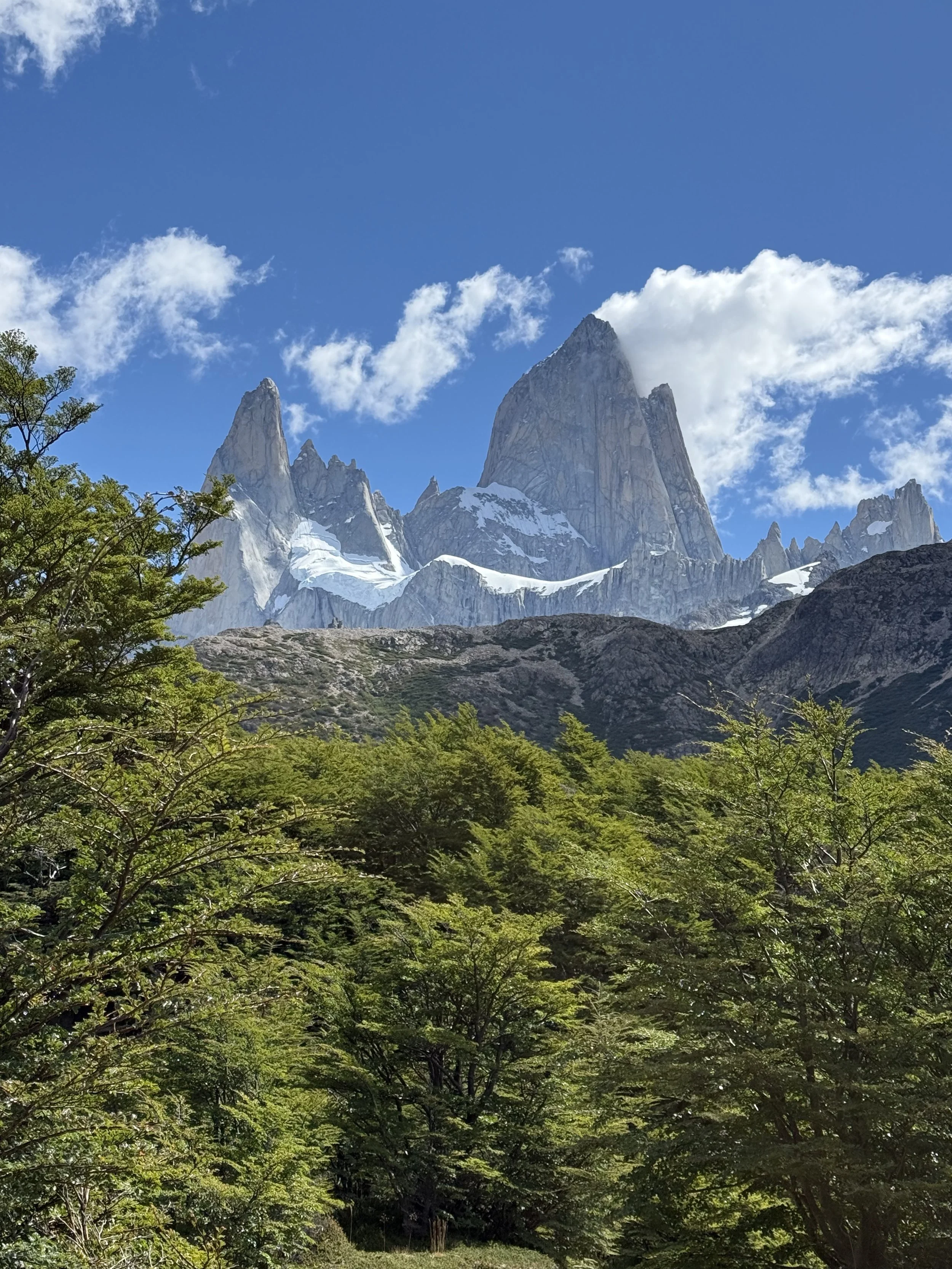
Laguna de los Tres hike (Monte Fitz-Roy, Cerro Poincenot, Aguja Saint-Exupéry)
El Calafate
El Calafate felt more like a base. It’s where you land, get your bearings, and then head out into the bigger landscapes.
Torres del Paine (day trip)
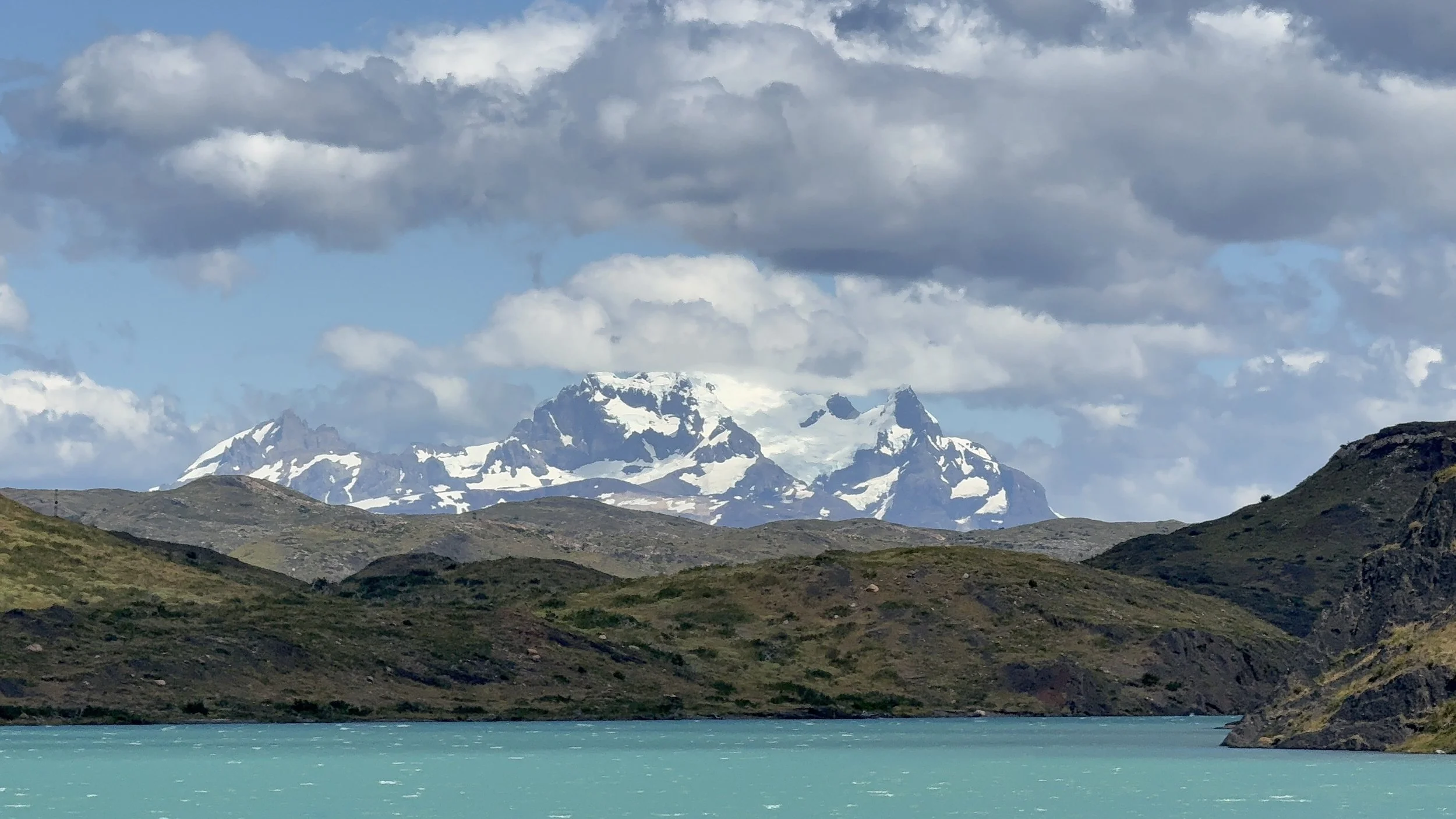
We rented a car in El Calafate and drove into Torres del Paine National Park for the day, and the landscape shifts the entire drive. You go from wide open, dry plains to dramatic, jagged peaks, with waterfalls, rivers, and bright blue lakes. It’s consistently impressive. It is also quite windy in places.
If you’re driving from Argentina into Chile for Torres del Paine National Park, the border process is pretty simple but does take a bit of time. You’ll first stop and go through Argentina’s exit customs, then drive a few miles and check in with Chile’s border control.
Border crossings into Chile for Torres del Paine National Park typically open around 8:00 AM and hours can vary by season, so it’s best to double-check current times here: https://www.pasosfronterizos.gov.cl/
One important thing to know. Don’t bring any fresh fruits or vegetables with you, even if you packed a lunch. Chile has strict agricultural rules and they will take them at the border. They come out to every car and do a full check. We didn’t know this and ended up losing about half our lunch.
There is a welcome center in the park where you can get food, so it’s not a big deal, just something to be aware of so you’re not surprised like we were.
We didn’t do any of the longer, more difficult hikes the park is known for. Instead, we did a shorter hike of about 1.5 hours that starts just beyond the Salto Grande mirador, called Cuernos Lookout.
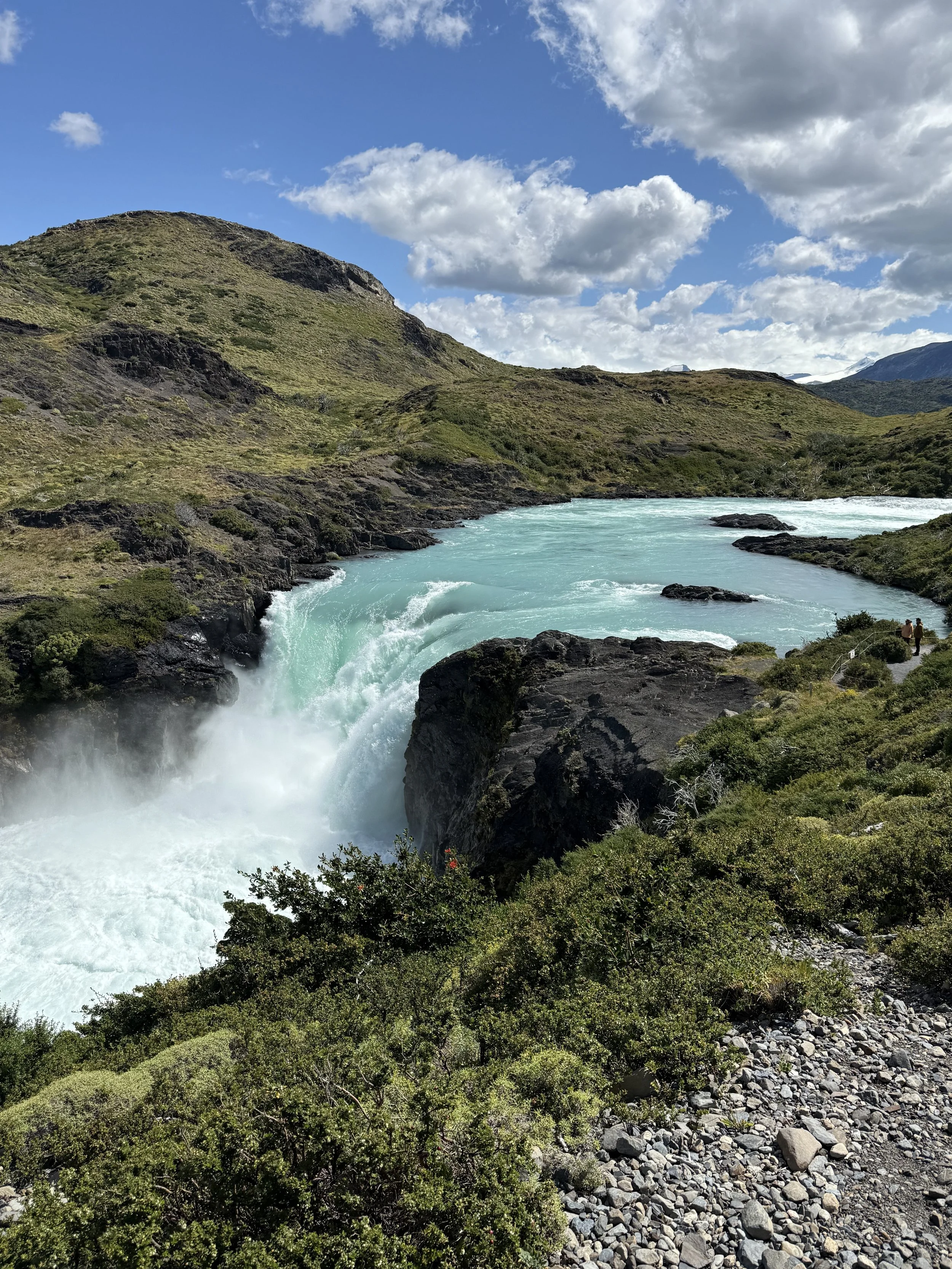
Mirador Salto Grande
The water along the trail is this bright, almost electric blue, and the waterfalls are powerful and loud. As you move along, you get different views of the Cuernos del Paine in the distance, and the contrast between the dark rock, snow, and turquoise lakes is incredible. Every direction you look feels like a different view.
We also saw guanacos along the road. They didn’t seem bothered by cars, but they do get close, so you need to pay attention while driving.
Torres del Paine is the kind of place where you keep pulling over, not because you planned to, but because you don’t want to miss what’s right in front of you.
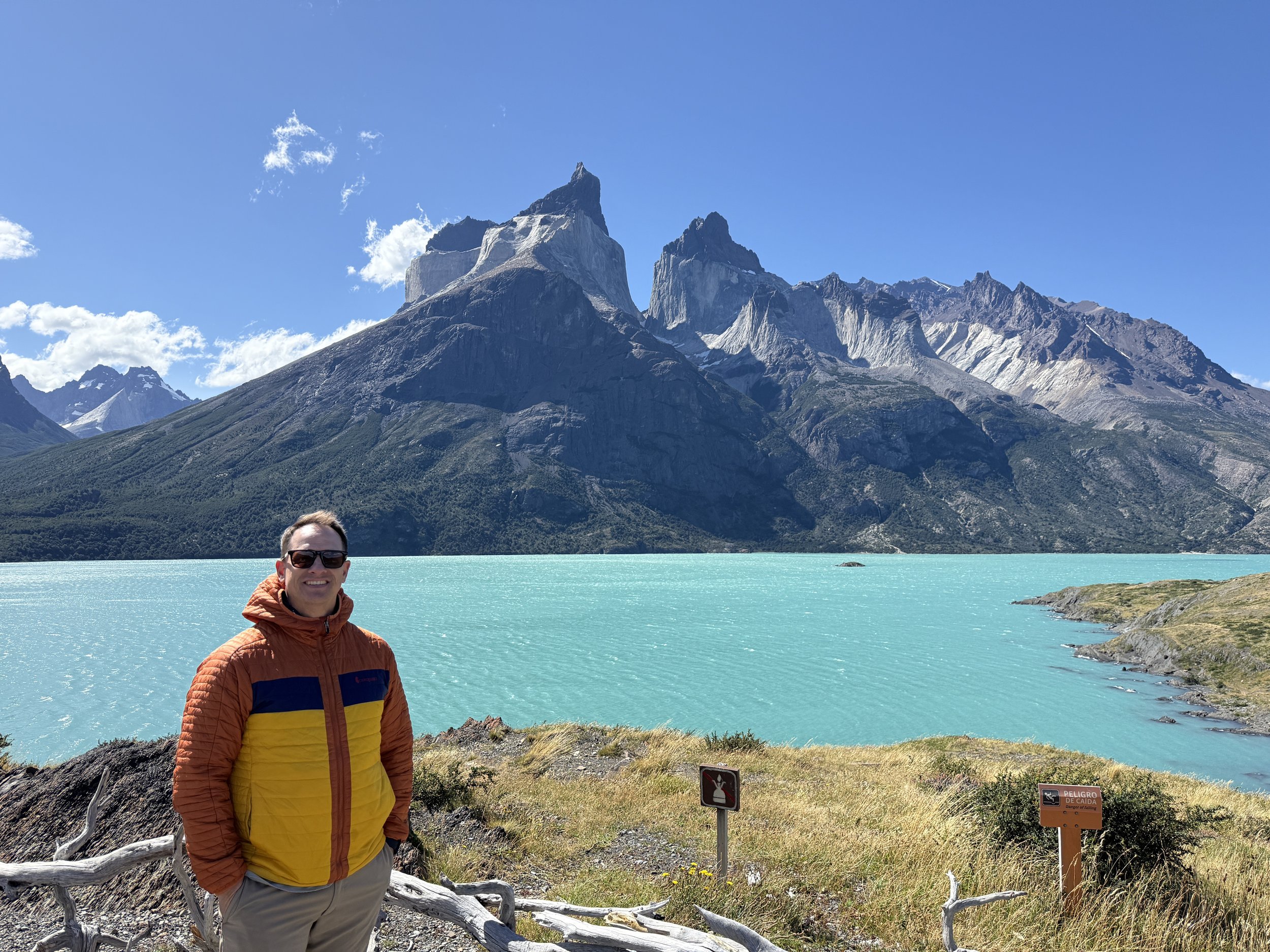
The end of Cuernos del Paine hike
Perito Moreno Glacier
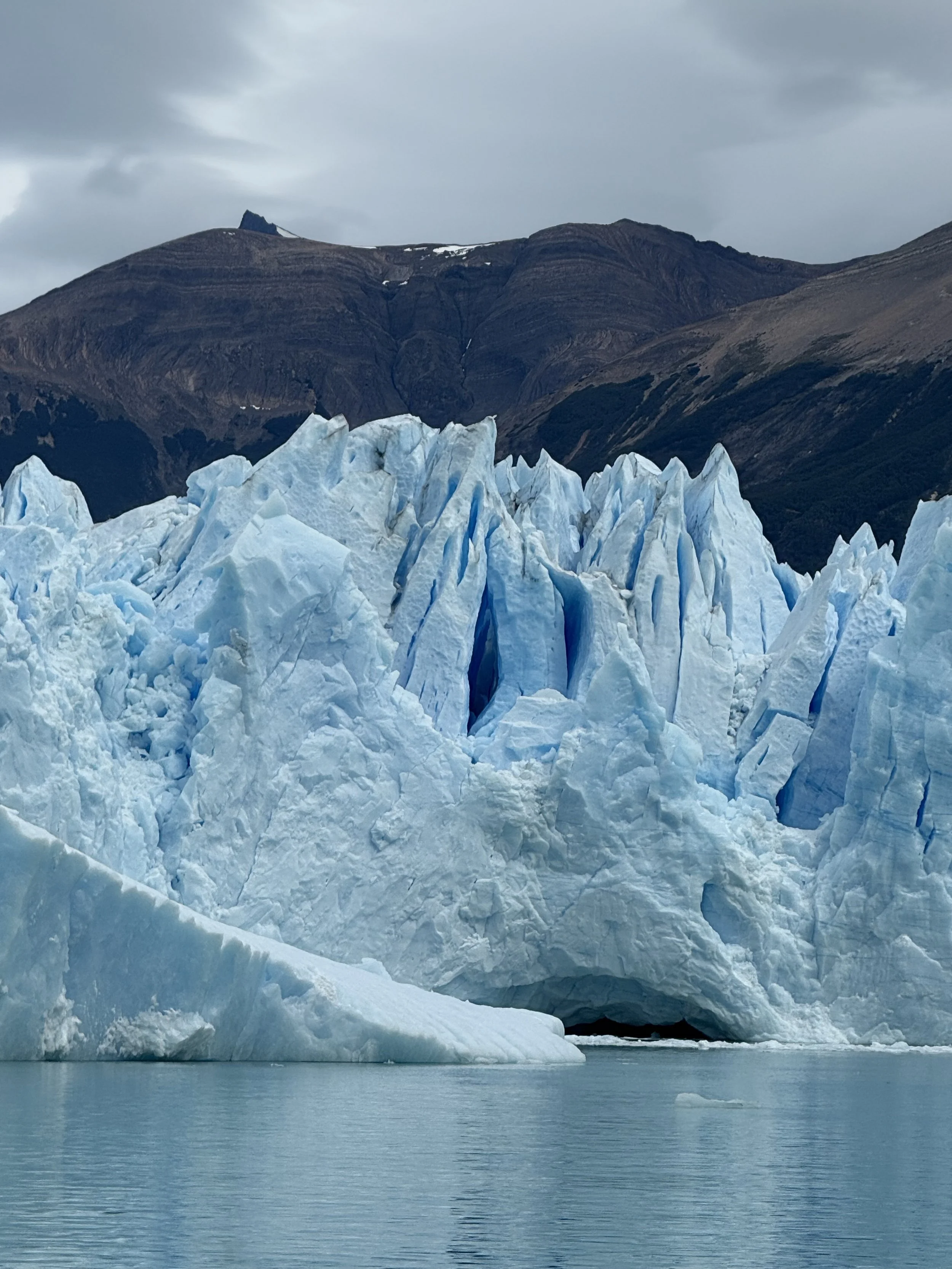
Seeing Perito Moreno Glacier was one of the highlights of the whole trip.
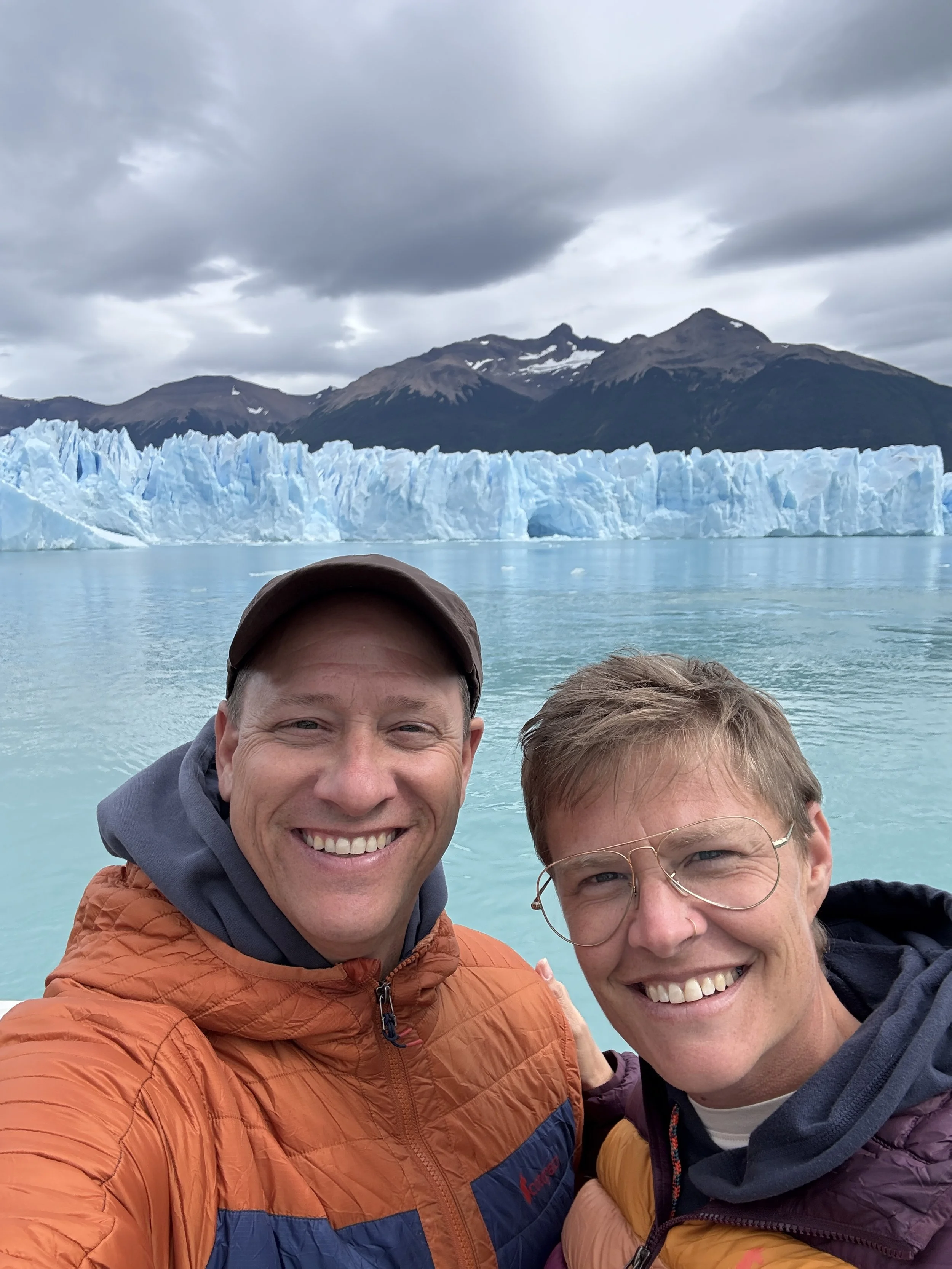
They’ve built an extensive walkway system with different levels and viewpoints, so you can experience the glacier from multiple angles without needing to hike. You’ll hear it before you see pieces fall. That deep cracking sound followed by ice breaking off into the water. We were able to see a very large piece of the glacier calve. It was incredible to witness in real time. (See it here!)
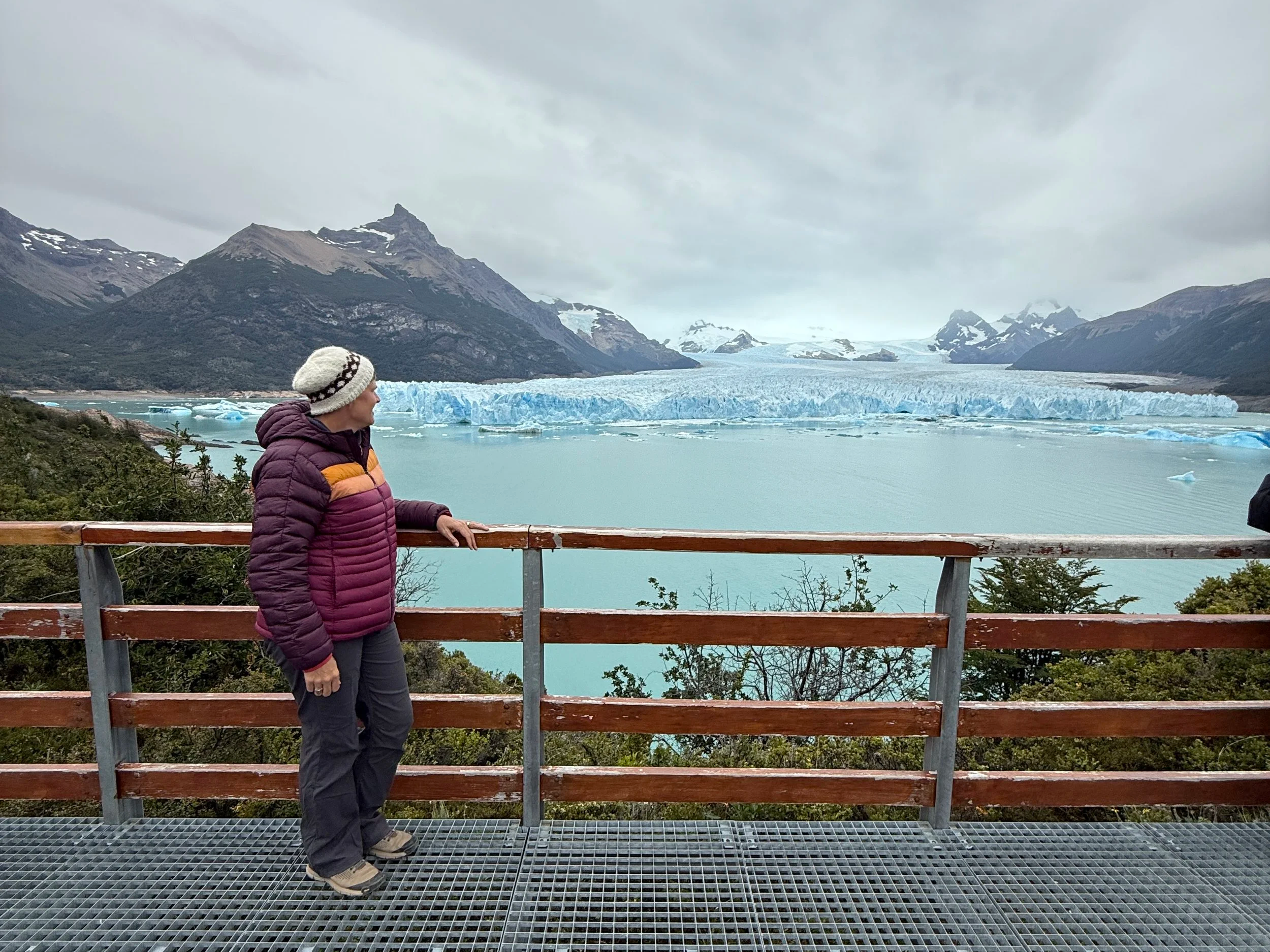
This is what the walkway looked like.
We hadn’t planned on doing the boat ride, so we just walked up to the ticket window and bought tickets. They run at set times throughout the day, so it’s worth booking ahead if you can. The walkway system is more of an out-and-back setup, so if your boat time comes up while you’re out exploring, you’ll have to turn around and head all the way back to make it. Booking in advance helps you plan your time on the walkways so you’re not rushing or cutting it short.
Driving + Logistics Tips
We found that renting a car for a couple days to explore Torres del Paine and the glacier was cheaper than booking tours, and it gave us way more flexibility. We didn’t want to take the bus because we liked being able to stop whenever we wanted and spend extra time in certain places.
If you’re driving from El Calafate to Torres del Paine National Park, make sure to fill up in Esperanza, even if you still have half a tank. There’s nowhere else to get gas, so it’s a critical stop. We were told by the car rental company that there was another gas station in a town near the border, so we didn’t stress about it at first.
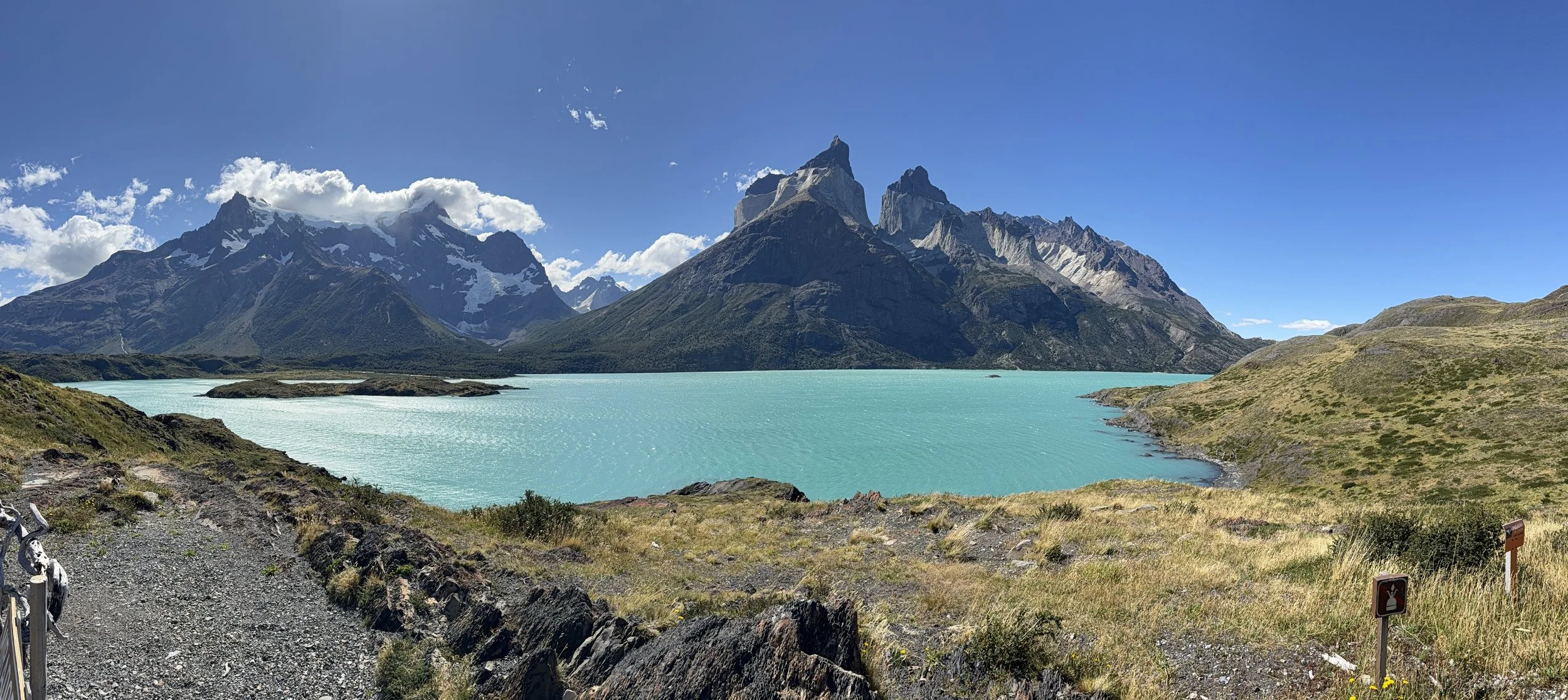
Cuernos del Paine hike, Torres del Paine National Park
We ended up spending the whole day driving through the park and exploring, and on the way back realized there was nothing out there. We were on pins and needles the entire drive, just hoping we’d make it. We rolled into Esperanza on fumes.
If you’re crossing the border with a rental car, you need to let the rental company know in advance so they can provide a vehicle with the proper permit to enter Chile. The permit was around $215. It’s also important to double check mileage limits ahead of time. We weren’t told there was one and were almost charged extra when we returned the car.
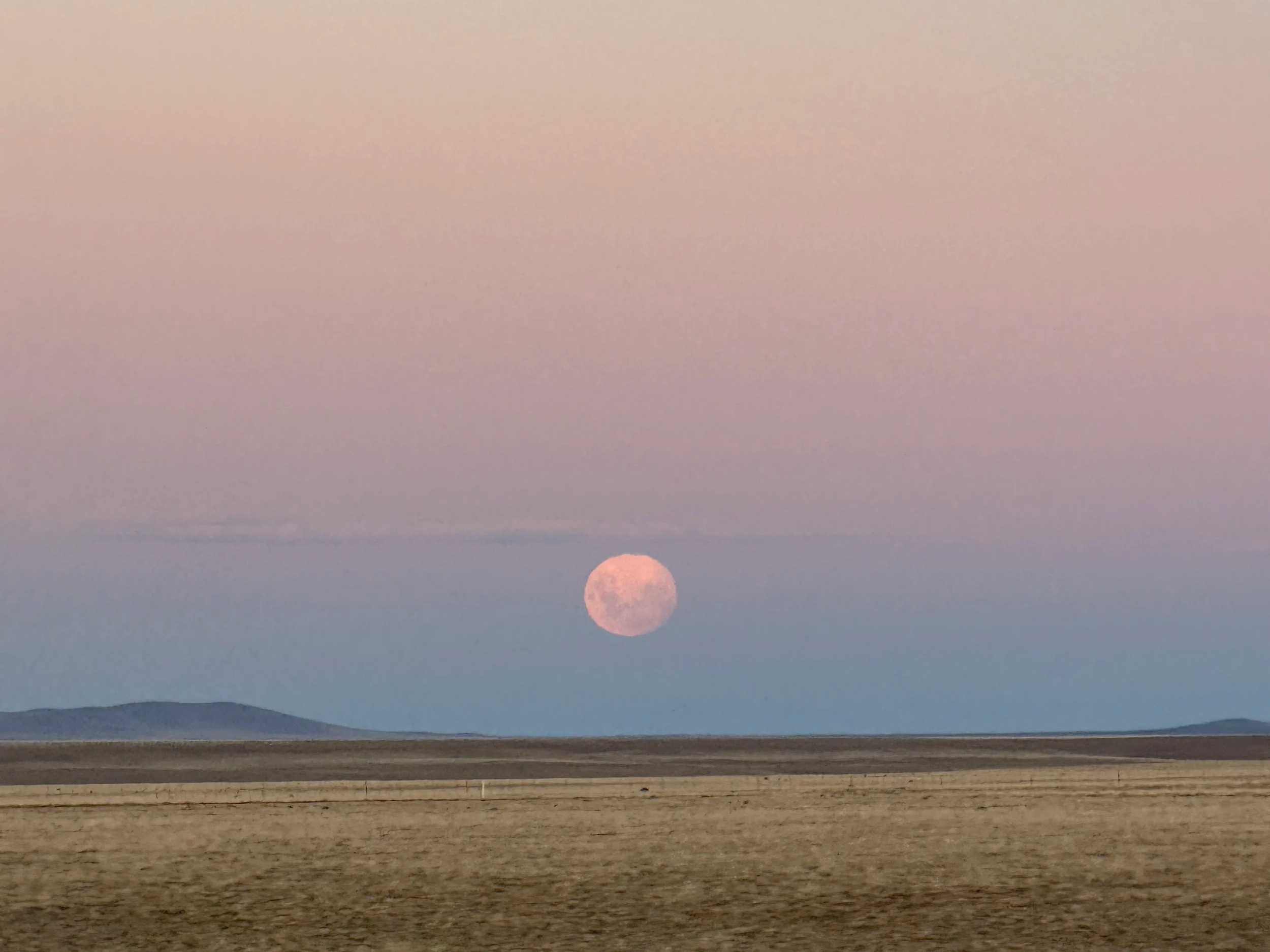
Sunset is late. Usually 16-18 hours of sunlight
It’s worth booking your rental early, as last-minute options for cheaper cars were limited. We also found it was better to go directly into local rental offices rather than booking online. Online reservations often had high deposits ($1,300–$2,000 USD) and higher prices compared to booking in person.
Money Tips
In El Calafate and El Chaltén you can only take out smaller amounts of money at ATMs and the fee is really high. However, it is better to have cash because they do upcharge you about 10 to 15% if you use a credit card.
El Chaltén
We took the bus from El Calafate to El Chaltén and back. It was easy and comfortable.(LINK)
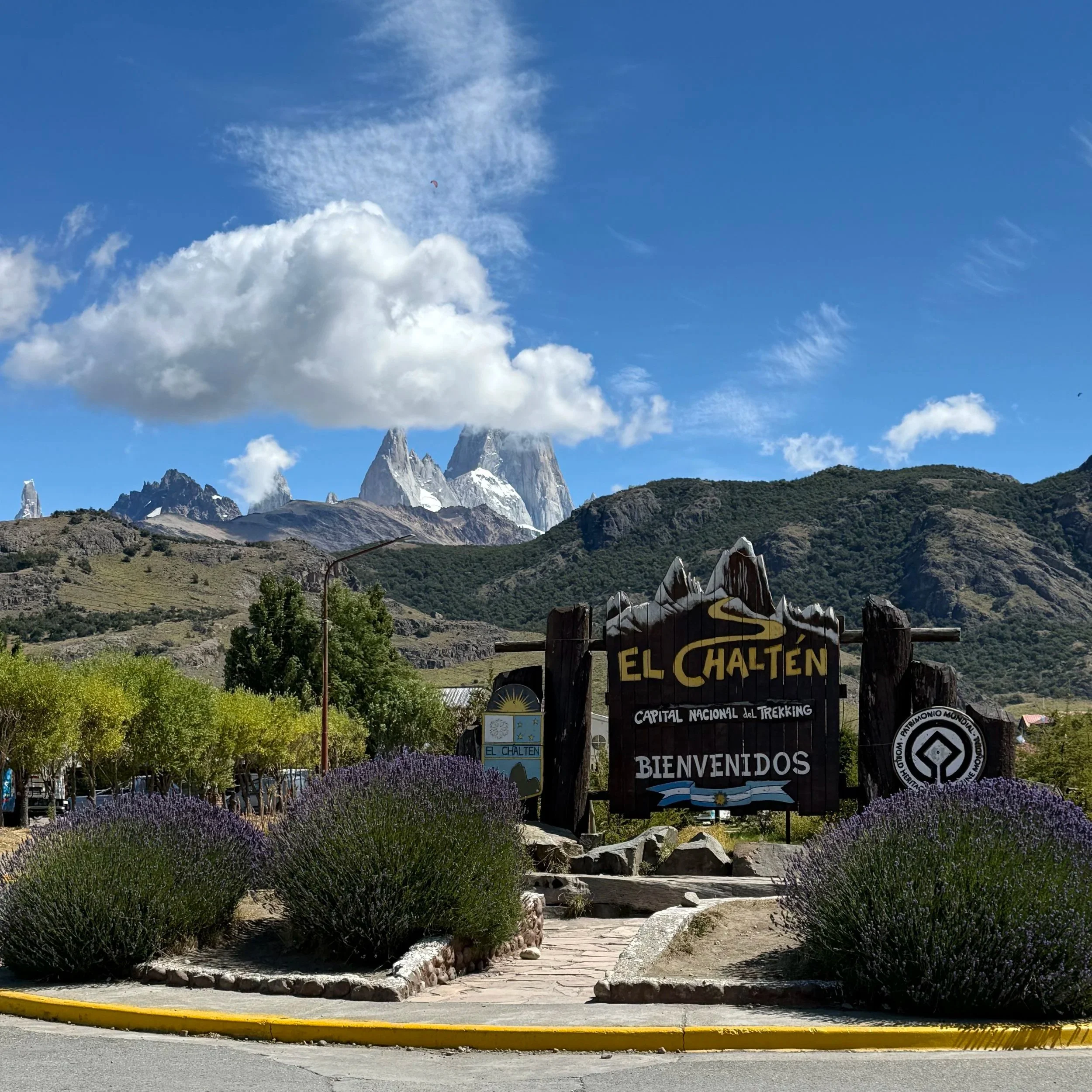
There’s really no need to rent a car in El Chaltén. From what we saw, only one hike requires driving to it. Everything else starts right from the edge of town or from the welcome center at the other end, so you can walk everywhere you need to go.
There are also a couple of laundry spots in town that offer drop-off and pick-up, which is super convenient if you’re there for a few days of hiking.
Food + Coffee
Fresco for pizza
Parilla La Oveja Negra for dinner
Hiking
We did three main hikes while we were there.
Our first day was Laguna de los Tres (starts at the end of town). It’s quite challenging, especially the final stretch, but very doable and worth it. It took us about 9 hours
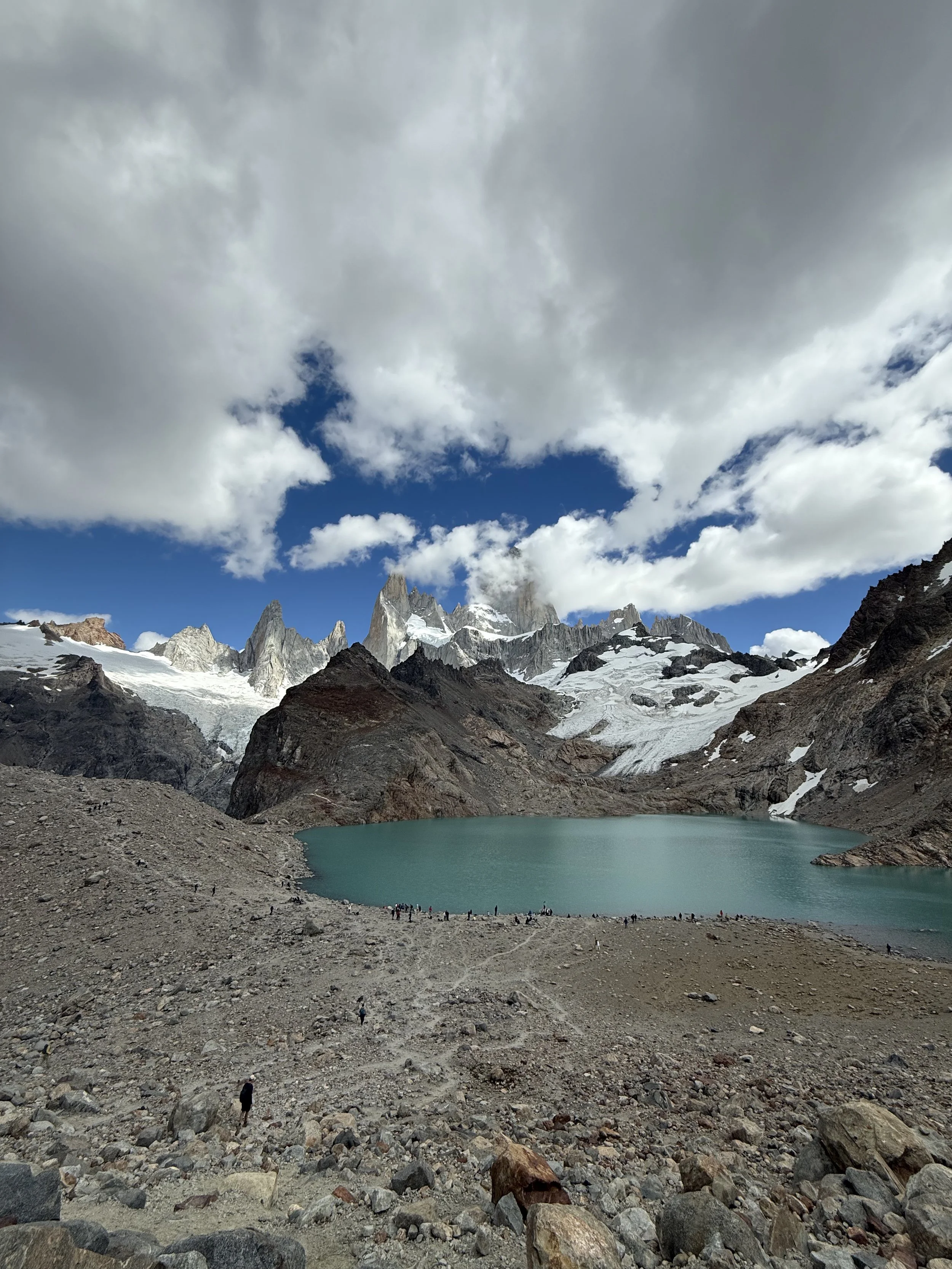
The top of Laguna los Tres
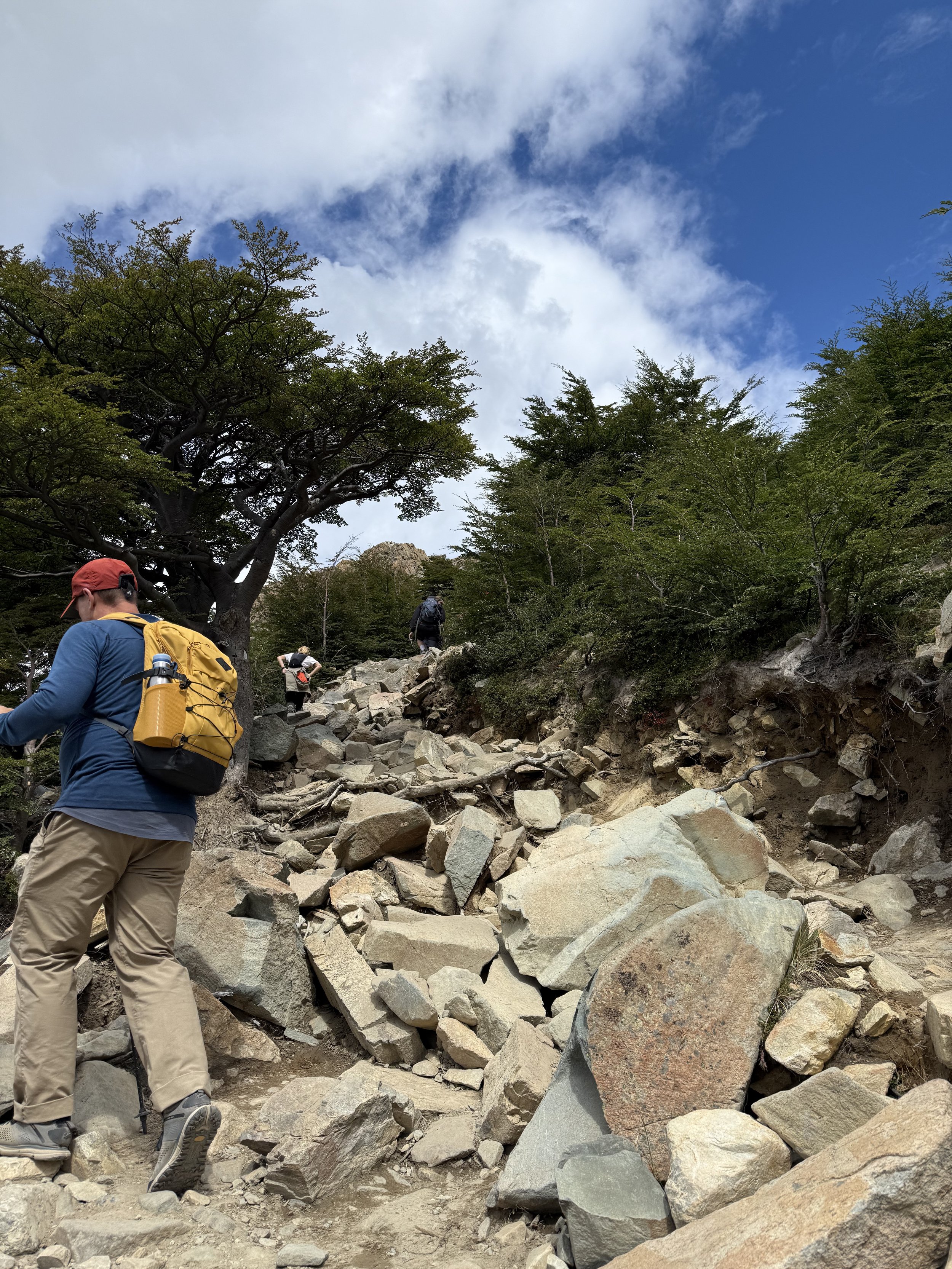
The last 1.5-2hrs of the hike was steep and very rocky
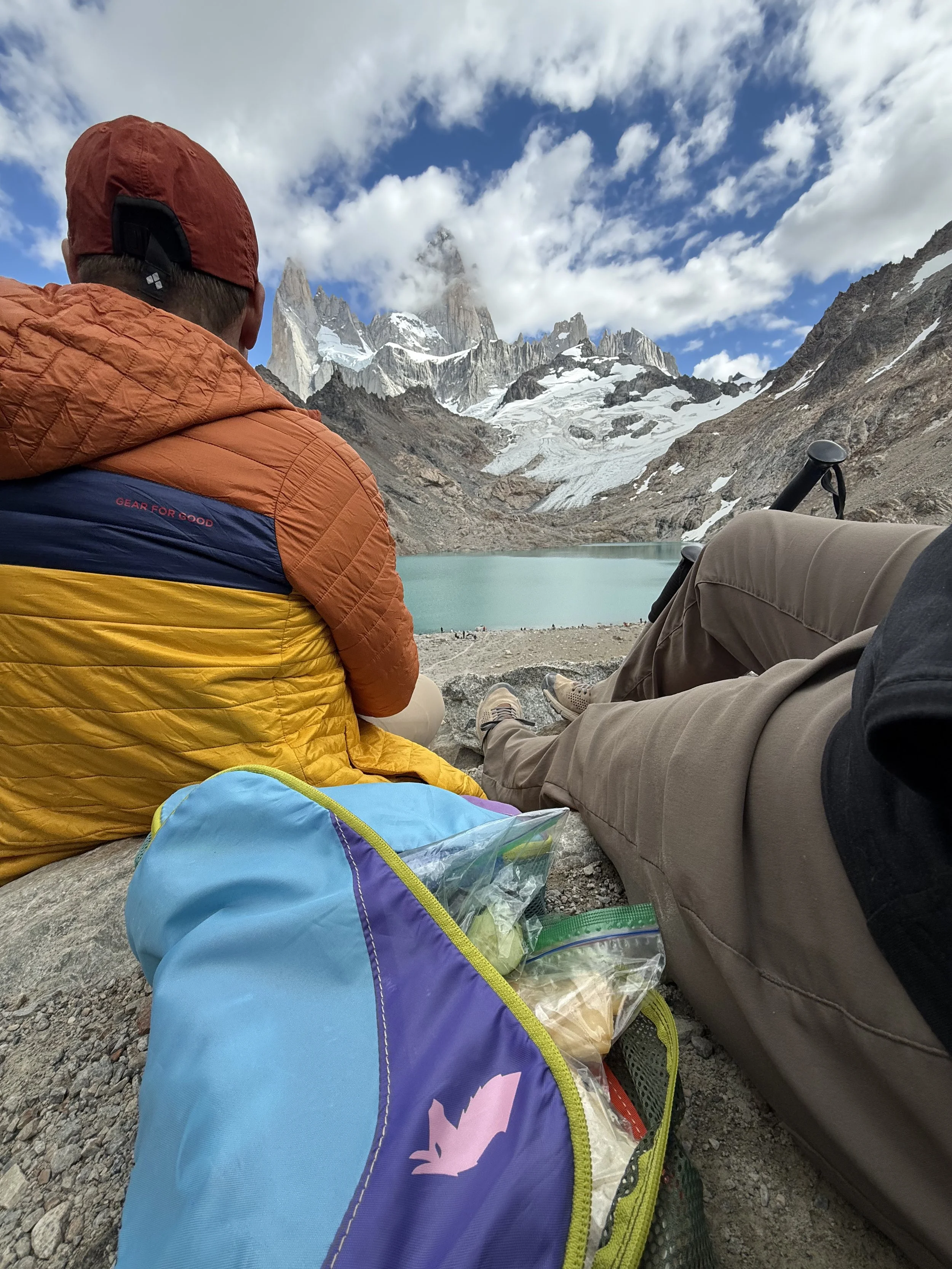
Worth it for the view!
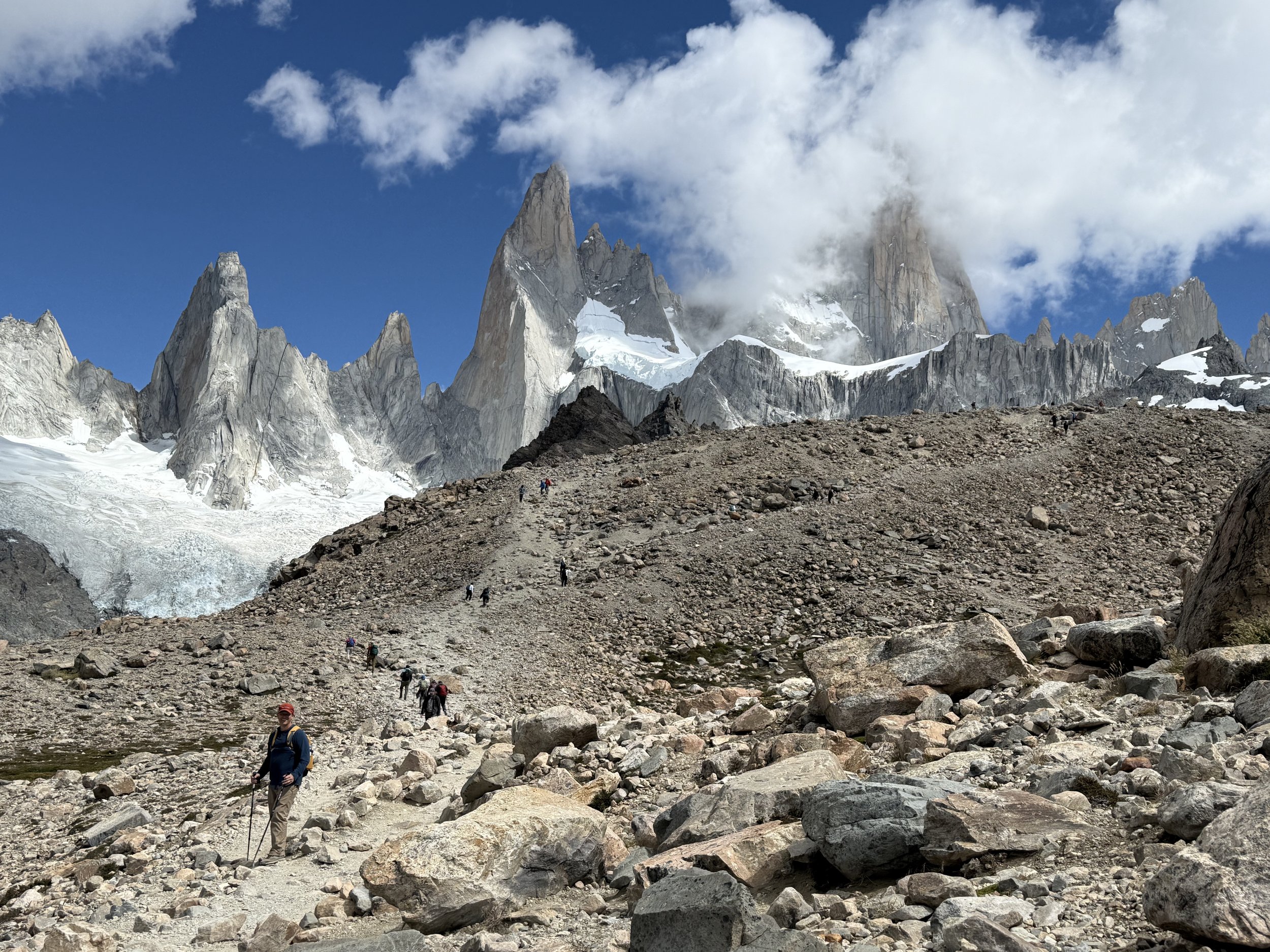
So many beautiful angles and views along the entire hike. Walk a few minutes and the landscape changes and your view changes.
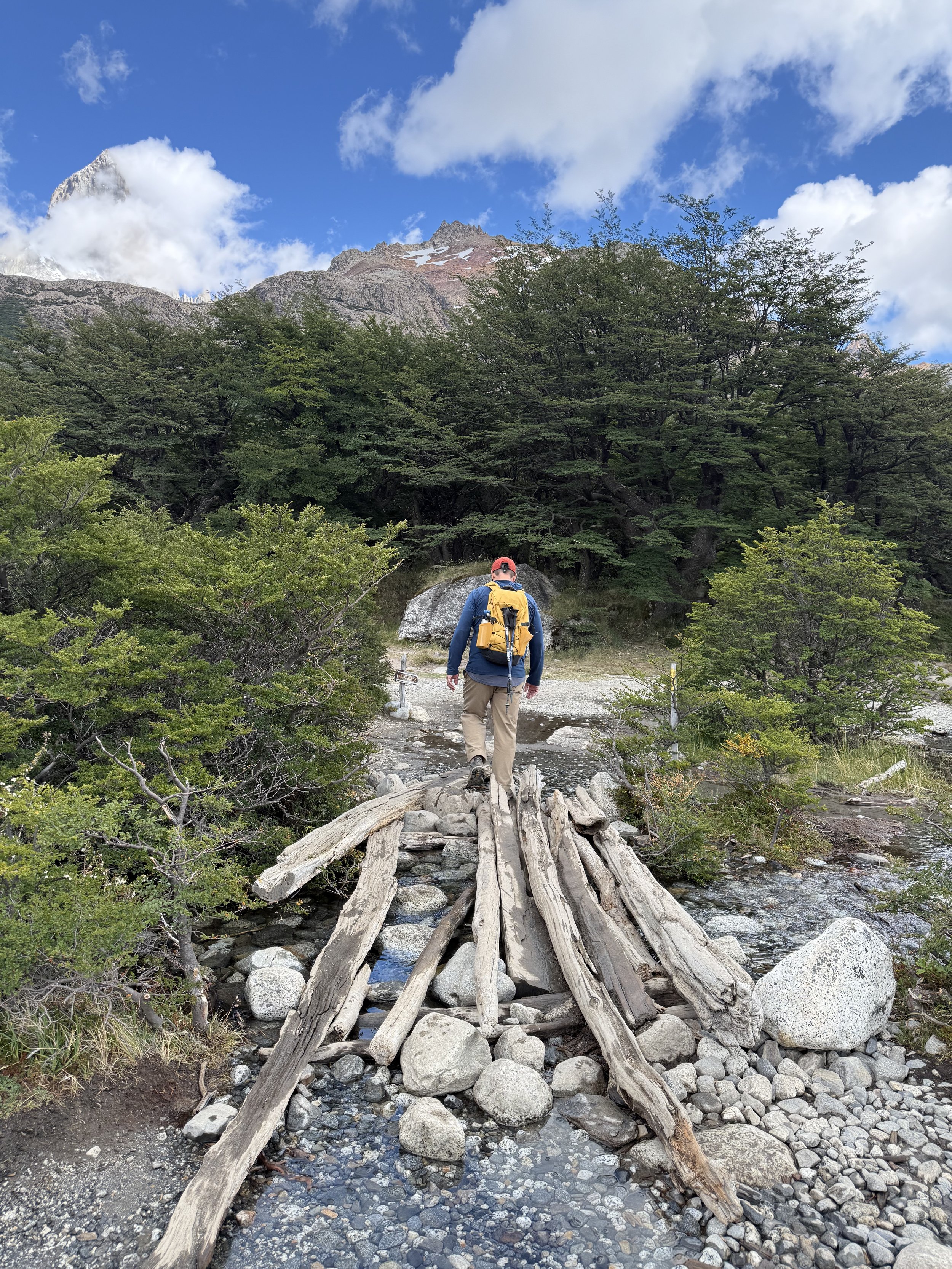
On the second day, we did Mirador Torres. Instead of the full Torres hike, we turned around at about 6 km rather than continuing the full 18 km route. It still gave us great views without committing to the full day.
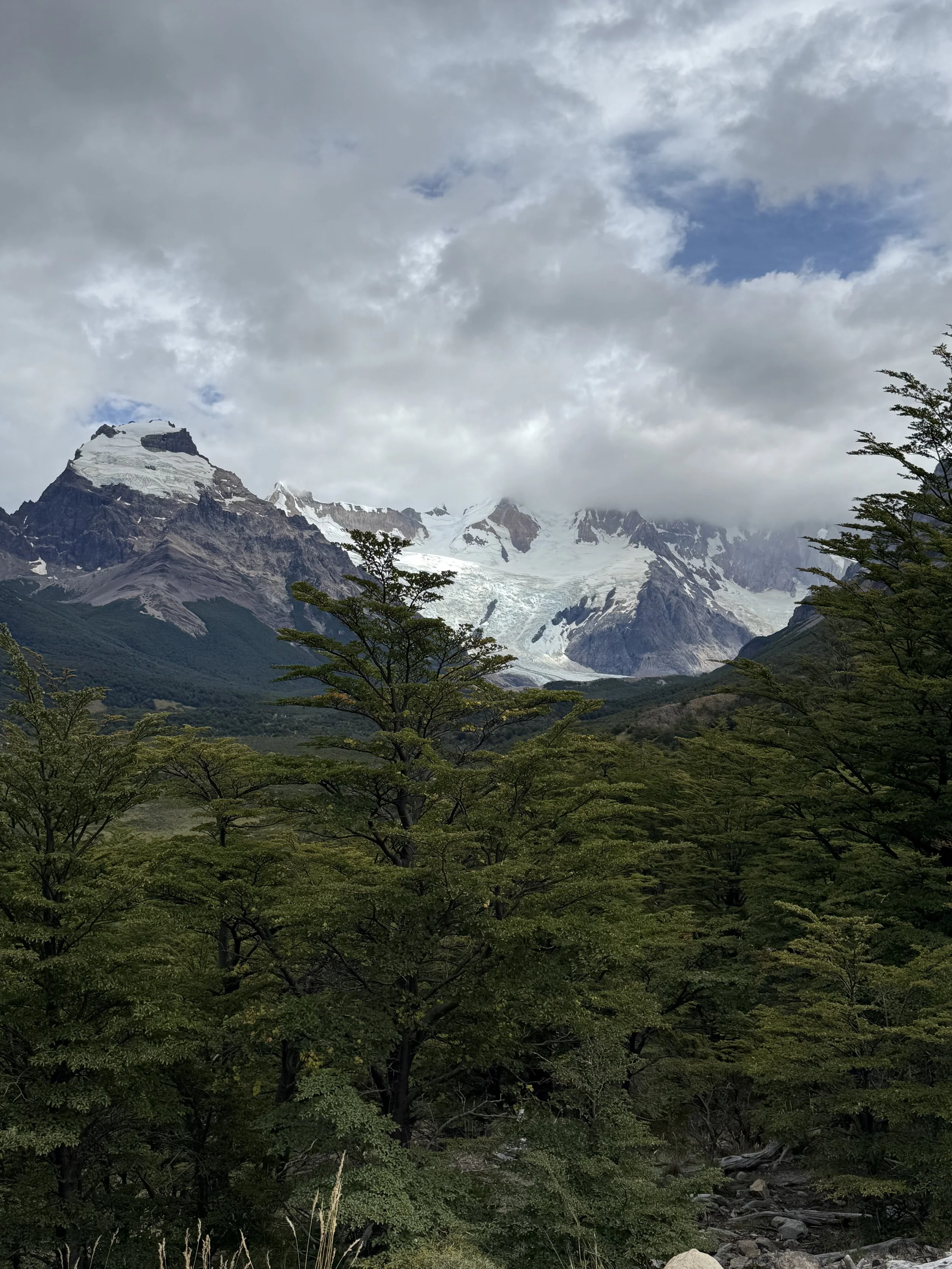
Mirador Torres
On the third day, we did Loma del Pliegue Tumbado (starts at the welcome center). Parts of it are steep, but overall it felt more manageable than Laguna de los Tres. The panoramic view at the top is incredible and this hike felt less crowded and a bit more underrated. Really glad we did it.
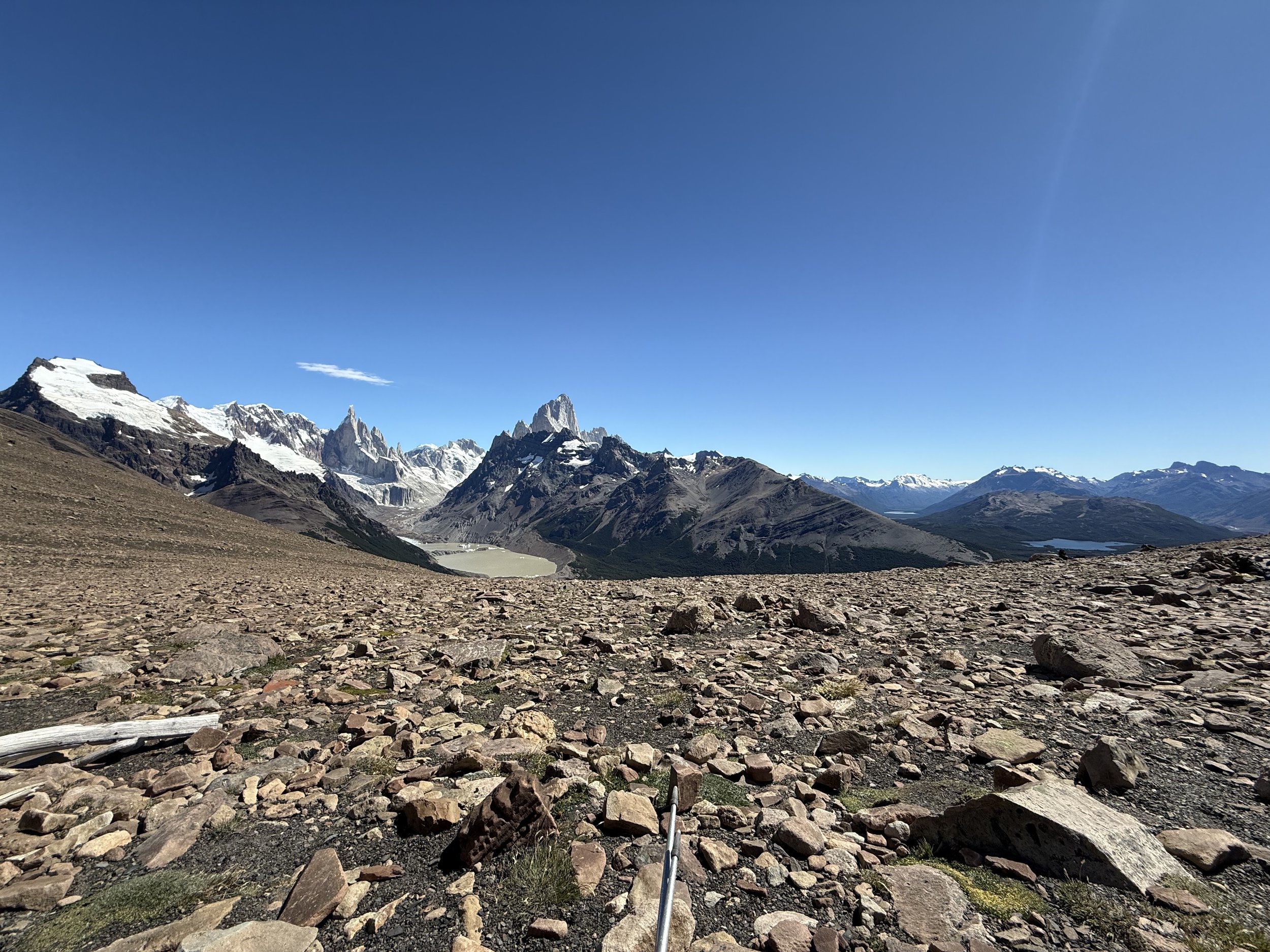
Panoramic view from the top. This photo doesn’t do the view justice. There were even more mountains!
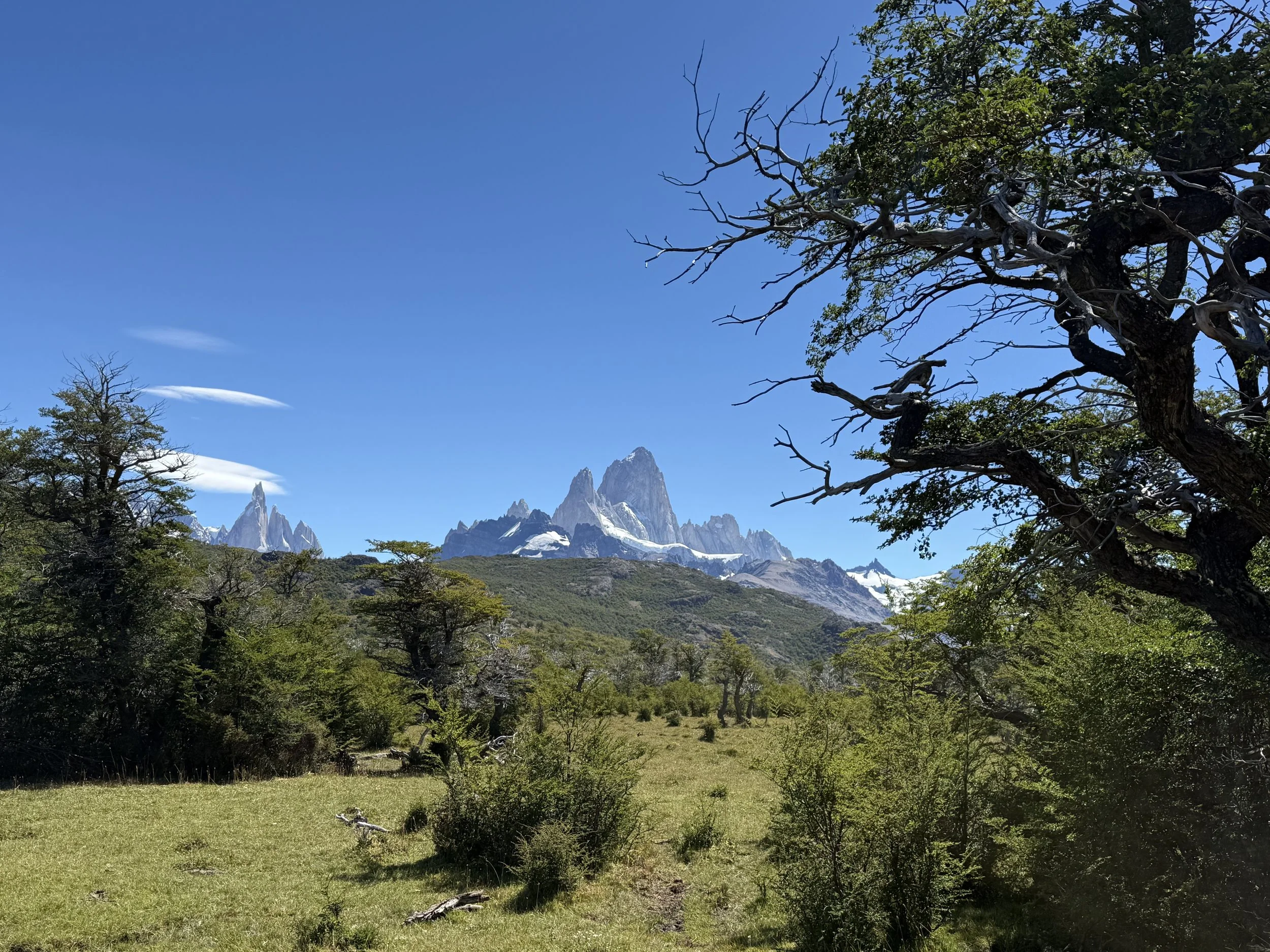
Loma del Pliegue Tumbado hike
Weather makes a big difference here. I’d recommend checking it daily and choosing hikes based on conditions. Laguna de los Tres and Loma are heavily weather dependent. If it’s cloudy, you miss the views that make them worth it, and the wind at the top can be pretty intense.
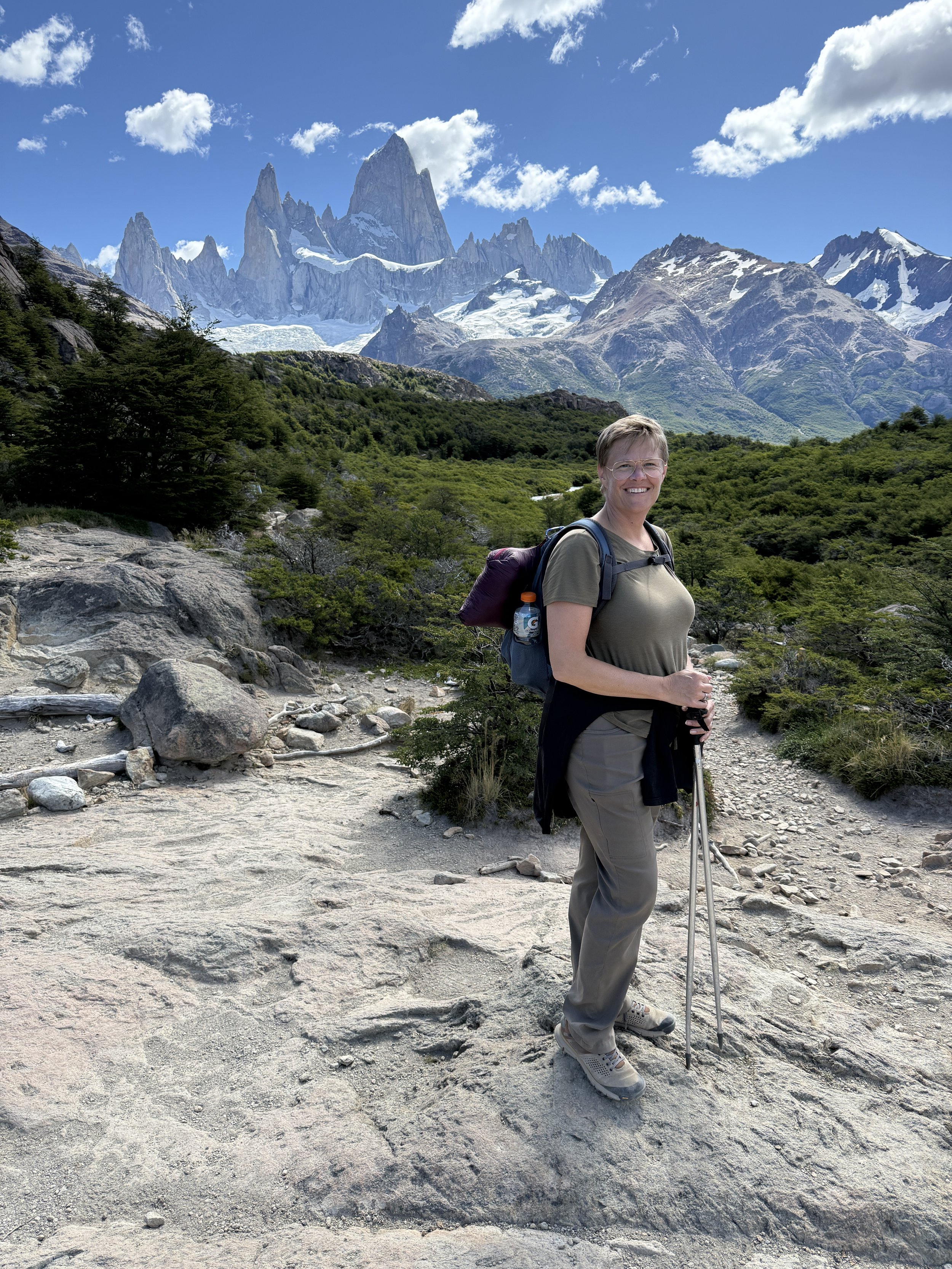
Loma del Pliegue Tumbado hike
We rented hiking poles from Patagonia Hikes and it made the descents much easier. They have a large variety of camping and hiking gear for rent.
Final Thoughts
This part of Patagonia felt like a mix of effort and ease, planning and letting go. There were long driving days, windy overlooks, quiet small towns, and hikes that asked something of you physically, but gave something back in return every time.
It’s a place where the scale of everything shifts. The landscapes are bigger than you expect, the weather changes quickly, and your plans often adjust with it. You learn to slow down a bit, pay attention, and not rush what’s in front of you.
More than anything, it’s just nature in every direction. Water, rock, ice, wind. Pachamama in full presence.